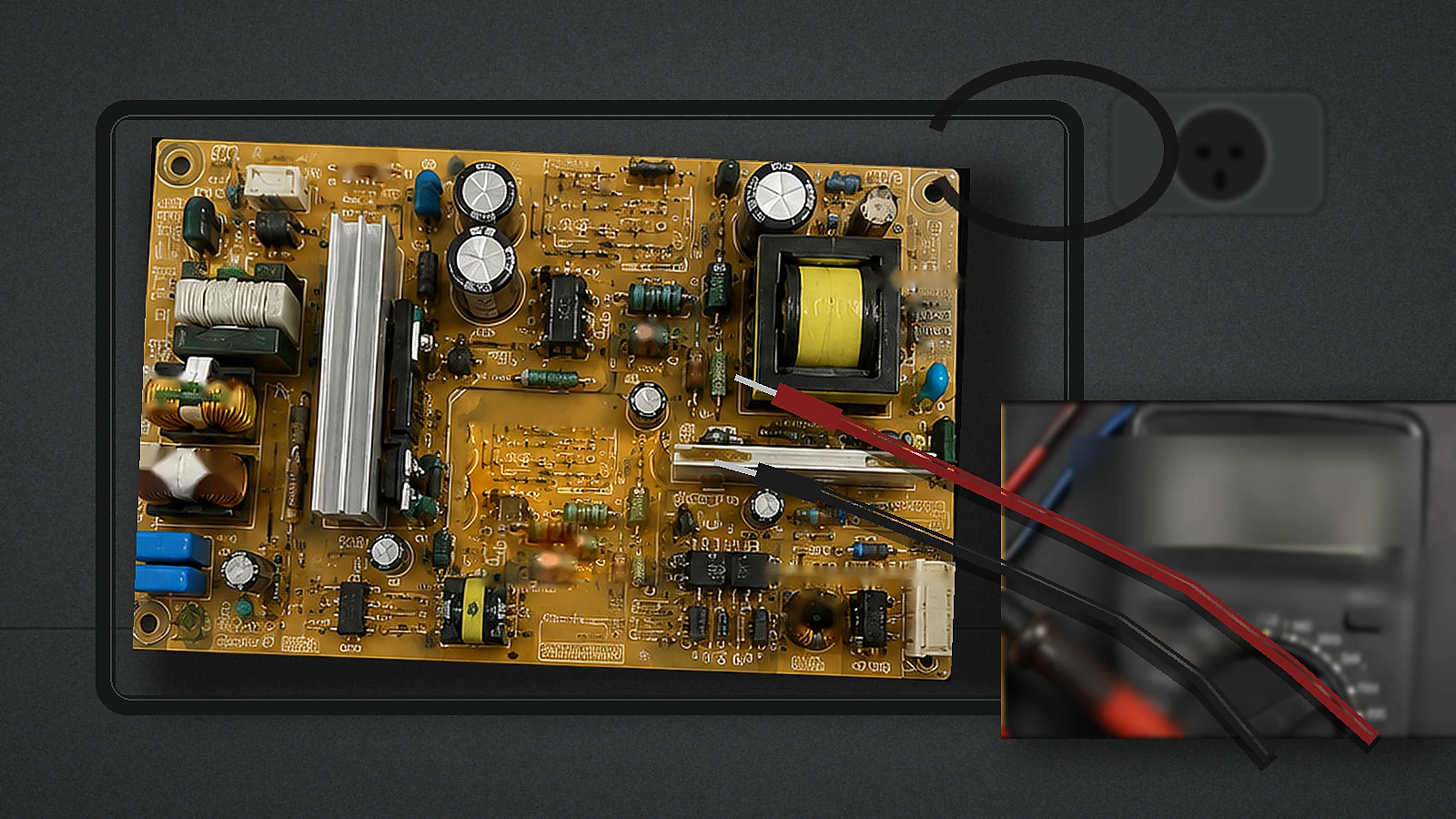
The TV power supply is one of the first components to take on everything that happens in the electrical grid. It converts the mains voltage into power lines for other TV components and, in many models, partially operates even in standby mode.
Therefore, a “burned-out power supply” is not a single diagnosis. The cause could be a voltage surge, prolonged abnormal voltage, overheating, component aging, poor contact, or a fault in another component.
Why a power supply can fail
Voltage surges
Short surges can occur due to load switching, wiring issues, grid events, or thunderstorms. A strong impulse can cause immediate damage, while repeated smaller impacts can accelerate degradation.
Thunderstorm
Surge protection reduces the risk but does not guarantee protection against a direct lightning strike. If a thunderstorm is expected, it is wise to safely disconnect the TV from the mains in advance.
Prolonged unstable voltage
SPD is designed primarily for short-term surges and does not replace electrical network diagnostics for prolonged voltage deviations.
Overheating
Blocked ventilation, cramped installation, dust, and external heat sources raise operating temperature and accelerate component aging.
Component aging
With age, component characteristics may degrade. However, unstable power-on or restarts by themselves do not prove a PSU malfunction.
Poor contacts and wiring
A socket that heats up, sparking, a burning smell, or a damaged cable require stopping use and inspection.
Load from another component
Sometimes the PSU is a consequence, not the root cause: a faulty TV component can create an abnormal load.
How to reduce the risk of damage
- Use a genuine surge protection device. A regular extension cord with a switch does not necessarily have such protection.
- Don’t confuse an SPD with a voltage stabilizer. Short pulses and prolonged abnormal voltage are different problems.
- Unplug your TV well before a severe thunderstorm. Do this before dangerous thunderstorm activity begins.
- Ensure ventilation. Do not cover the enclosure openings and follow the manufacturer’s placement requirements.
- Watch the outlet and the cable. Do not use melted, damaged, or overheating connections.
- Don’t ignore recurring failures. Restarts and unstable startup require finding the underlying cause.
What not to do at home
Do not open the primary side of the power supply without proper qualifications. Do not replace the fuse with a higher-rated one, do not install jumpers, and do not turn the TV back on after smoke, sparking, or a burning smell. Inside the PSU there are dangerous mains circuits, and storage components may retain a charge after disconnection.
Does a TV need a voltage stabilizer?
Not always. First, you need to determine whether there is a sustained voltage deviation and what causes it. For surges, surge protection is used; for persistent grid problems, other solutions are required, selected based on a power supply inspection.
A short reminder for the owner
- Use a working outlet.
- To protect against surges, choose a genuine SPD/surge protector.
- Entrust comprehensive panel protection to a qualified electrician.
- Before a severe thunderstorm, unplug the TV from the power outlet in advance, if it is safe to do so.
- Do not block the ventilation.
- Do not use damaged cables or outlets that overheat.
- If there is smoke or sparking, do not turn the TV back on.
- If failures recur, look for the cause.
Conclusion
The risk of power supply failure is reduced by proper wiring, appropriate surge protection, adequate ventilation, and timely response to the first signs of malfunction.
TV Repair specialists can perform diagnostics, determine the cause of the malfunction, and offer a suitable repair or maintenance solution.